
What is NUCCA?
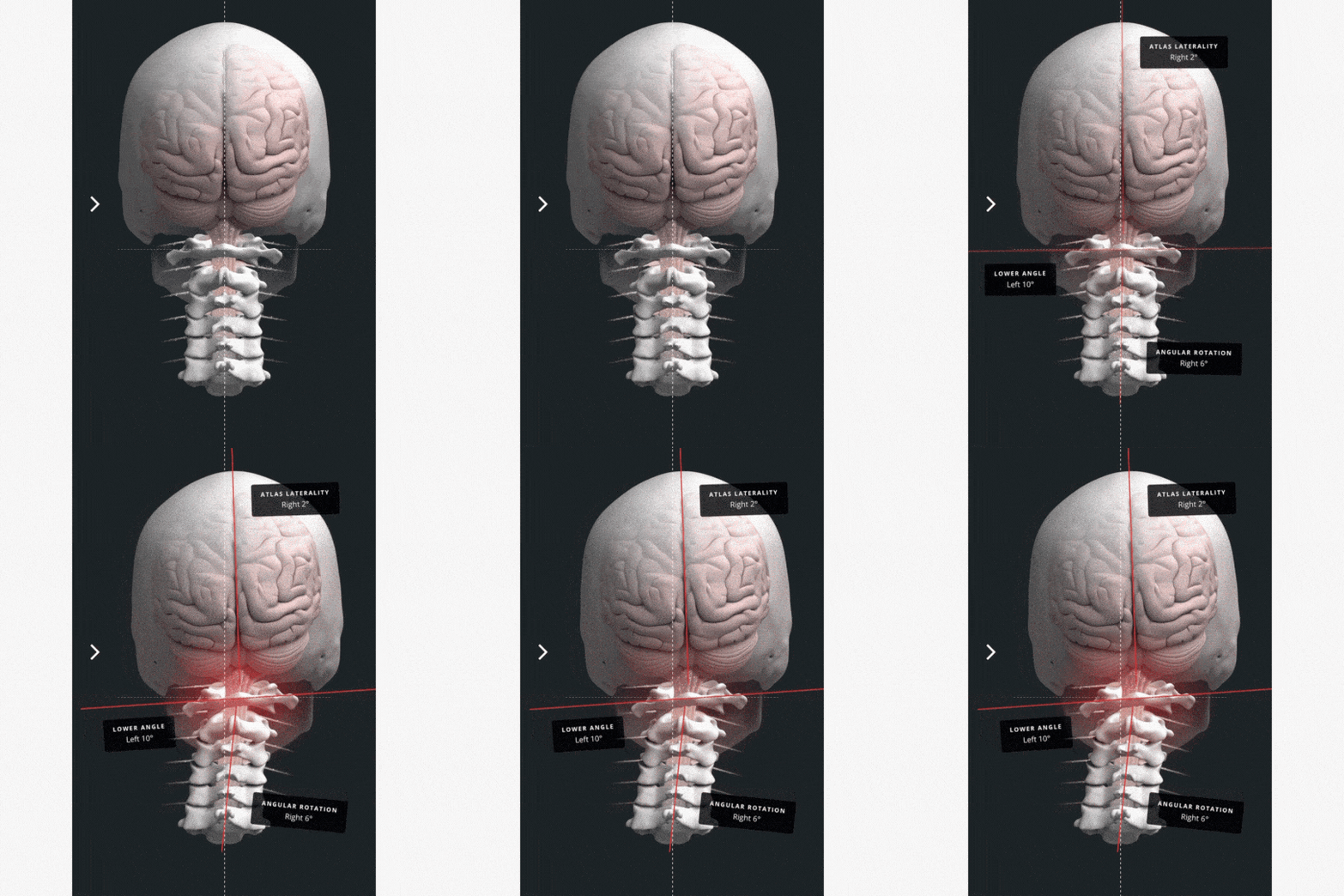
NUCCA is a specialized approach to upper cervical chiropractic care that focuses on restoring the relationship between the head and upper neck.
The goal is to support healthy communication between the brain and body, helping the body function, adapt, and heal as effectively as possible.
NUCCA stands for the National Upper Cervical Chiropractic Association, the organization that developed and continues to teach this unique approach to upper cervical chiropractors.
What makes NUCCA different?
NUCCA takes a different approach to chiropractic by combining precise analysis, advanced measurements, and gentle corrections designed specifically for each patient.
Precision Based On Science
NUCCA is founded on principles of anatomy, biomechanics, mathematics, and physics. Using detailed analysis and imaging of the upper neck, NUCCA doctors determine each person's unique misalignment and develop a specific correction based on those findings.
Objective Measurement & Progress Tracking
Unlike approaches that rely only on symptoms or how a person feels, NUCCA uses pre- and post-adjustment imaging and objective measurements to evaluate alignment changes and monitor progress over time.
Gentle, Specific Corrections
NUCCA adjustments are gentle, precise, and comfortable. The technique does not involve twisting, cracking, or popping of the neck. Instead, the goal is to provide a specific correction that supports the body's ability to adapt, function and recover faster.
What does the NUCCA process consist of?

1. The NUCCA Assessment

2. The NUCCA Adjustment

3. NUCCA Follow-Up Care
STEP ONE:
The NUCCA Assessment
The NUCCA Chiropractic Assessment is a comprehensive 75-minute assessment designed to determine whether problems in your upper neck could be contributing to your symptoms and whether NUCCA care is the right fit for you.
During your visit, Dr. Burt will perform three evaluations:
-
Postural Examination – Evaluates your posture and body alignment.
-
Functional Neck Examination (NeckCare) – Measures how your neck moves and how well your neck and brain are working together.
-
Structural Neck Examination – Includes specialized X-rays of your head and upper neck, which are analyzed using advanced imaging software to precisely measure the alignment of your upper neck.
Before you leave, Dr. Burt will review all of your findings with you, explain what they mean, and answer any questions you have. You'll also receive a printed and emailed copy of your report for your records.


STEP TWO:
The NUCCA Adjustment
The NUCCA adjustment is performed at the top of your neck, directed at the Atlas Vertebra (C1).
The adjustment is gentle, done by hand and does NOT involve any twisting, popping or cracking.
Immediately following your adjustment, x-rays are taken again and compared to your first set, ensuring your misalignment has improved. We do NOT take x-rays every visit, only a pre and post set.
Afterward, it is recommended you relax in one of our zero-gravity chairs to integrate the re-alignment.

STEP THREE:
NUCCA Follow-Up Care
Dr. Burt will monitor your alignment, starting with visits 1x per week, to ensure you stabilize and maintain your correct alignment long-term.
As you continue to maintain and “hold” your proper alignment, your appointment frequency will be reduced.
Everyone progresses through care and heals at a different speed. This depends on several factors that will be discussed with you after your assessment.

Can NUCCA Chiropractic Help Me?
NUCCA can help you IF you have:

Had a neck injury or concussion.

Been in a car accident.

Played Sports

Altered posture with tight neck or back muscles.
The upper neck plays an important role in communication between the brain and body, including systems involved with posture, balance, movement, and body awareness.
When the relationship between the head and upper neck is altered, it may affect how the body senses and adapts, potentially contributing to a variety of symptoms.
People seeking NUCCA care report symptoms often including:
Head & Neck
Headaches
Migraines
Neck pain or Stiffness
Jaw Tension
TMJ-Related Discomfort
Balance and Neurological
Dizziness or Lightheadedness
Balance Issues
Brain Fog
Difficulty Concentrating
Autonomic and Body Regulation
Symptoms associated with conditions such as POTS, dysautonomia or vagus nerve problems.
If you are experiencing persistent symptoms that have not improved, especially after an injury such as whiplash or concussion, an evaluation of the upper neck may help determine whether it is the missing piece to your condition.